NEAT (non-exercise activity thermogenesis) is the energy you burn through everything that is not sleeping, eating or planned exercise: walking, standing, cleaning, carrying, fidgeting. For most people it is a bigger and more variable part of TDEE than gym workouts.
What the research shows
- Overfeeding study (Levine et al., 1999, Science). 16 adults ate 1,000 kcal a day above their needs for 8 weeks. Their change in NEAT ranged from a drop of about 100 kcal to a rise of about 690 kcal a day. People whose NEAT rose most gained the least fat.
- Sitting study (Levine et al., 2005, Science). People with obesity sat about 2 hours more per day than lean people with similar jobs. The authors estimated that the extra standing and walking of the lean group was worth about 350 kcal a day.
The point: two people with the same gym schedule can have very different TDEEs because of how much they move the rest of the day.
NEAT examples
| Activity | What it adds |
|---|---|
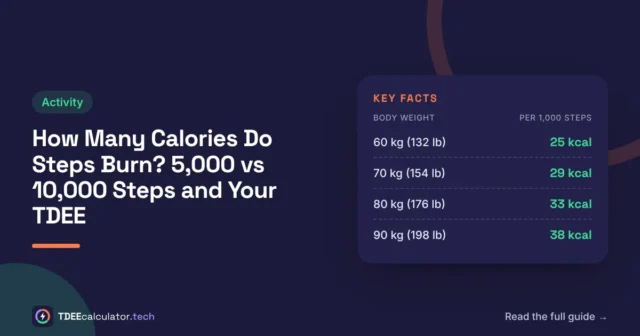
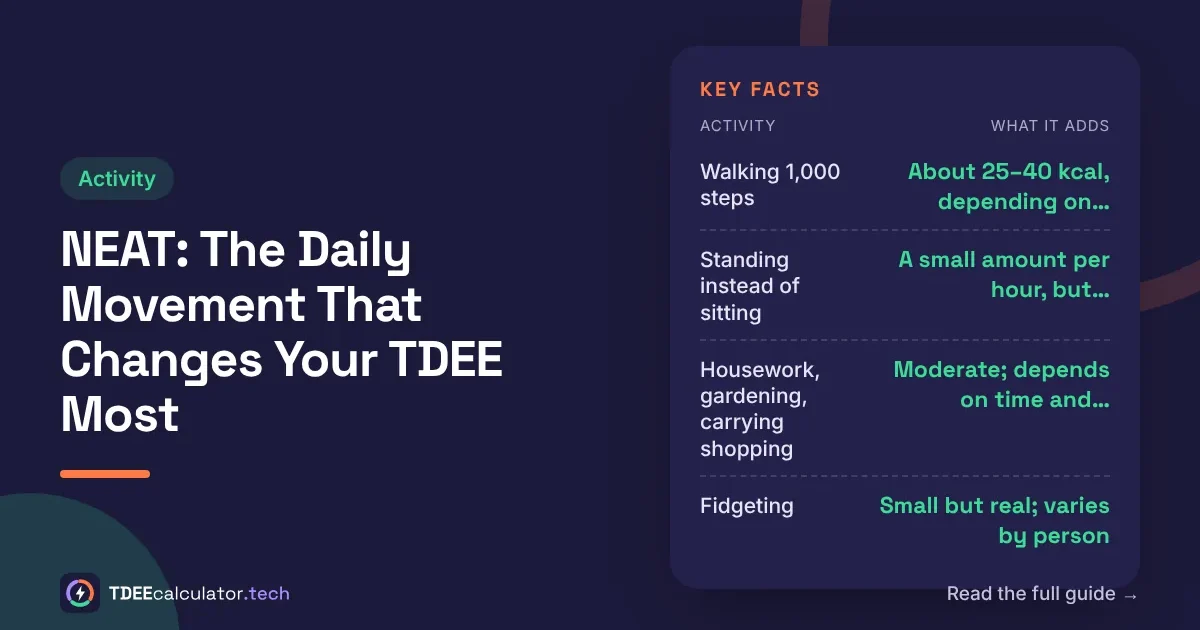
| Walking 1,000 steps | About 25–40 kcal, depending on body weight (steps guide) |
| Standing instead of sitting | A small amount per hour, but adds up over a day |
| Housework, gardening, carrying shopping | Moderate; depends on time and effort |
| Fidgeting | Small but real; varies by person |
Exact values depend on body size and pace, so treat these as rough guides.
Why NEAT drops on a diet
When you eat less, you tend to move less without noticing: fewer steps, more sitting, less fidgeting. This is one reason weight loss slows. Tracking daily steps makes the drop visible.
Simple ways to raise NEAT
- Set a step target about 2,000 steps above your current average, then build up.
- Walk after meals for 10–15 minutes.
- Take calls standing or walking.
- Use stairs for 1–3 floors.
- Break up sitting: stand and move for a few minutes every hour.
- Carry things: shopping baskets instead of trolleys when practical.
NEAT and your activity level
The activity factor on a TDEE calculator covers exercise and NEAT together. A desk worker who trains 4 times a week but sits the rest of the day may be closer to “lightly active” than “moderately active”. See TDEE for desk workers, then run the TDEE calculator.
To estimate the calories of a specific walk, use Tuff Search’s walking calorie calculator.
Sources
- Levine JA, Eberhardt NL, Jensen MD (1999). Role of nonexercise activity thermogenesis in resistance to fat gain in humans. Science 283:212–214. https://doi.org/10.1126/science.283.5399.212
- Levine JA, et al. (2005). Interindividual variation in posture allocation: possible role in human obesity. Science 307:584–586. https://doi.org/10.1126/science.1106561
This article is general information for healthy adults, not medical advice.